
Author: Site Editor Publish Time: 2026-01-14 Origin: Site
Thermal spray technology is revolutionizing how industries enhance material performance. By applying durable coatings to surfaces, it improves wear resistance, corrosion protection, and thermal management without significantly altering the base material. As industries push for more efficient, long-lasting materials, thermal spray coatings offer an innovative solution.
In this article, we’ll dive into what thermal spray technology is, how it works, and the various applications it has across industries. You’ll gain a deeper understanding of how this technology enhances material properties and its growing importance in modern manufacturing.
Thermal spray is a surface engineering technique where molten or semi-molten materials are sprayed onto a substrate. This process uses high-energy heat sources to melt or soften feedstock materials such as metals, ceramics, or polymers. Once heated, these materials are accelerated towards the surface to form a coating that adheres mechanically to the substrate, enhancing its properties.
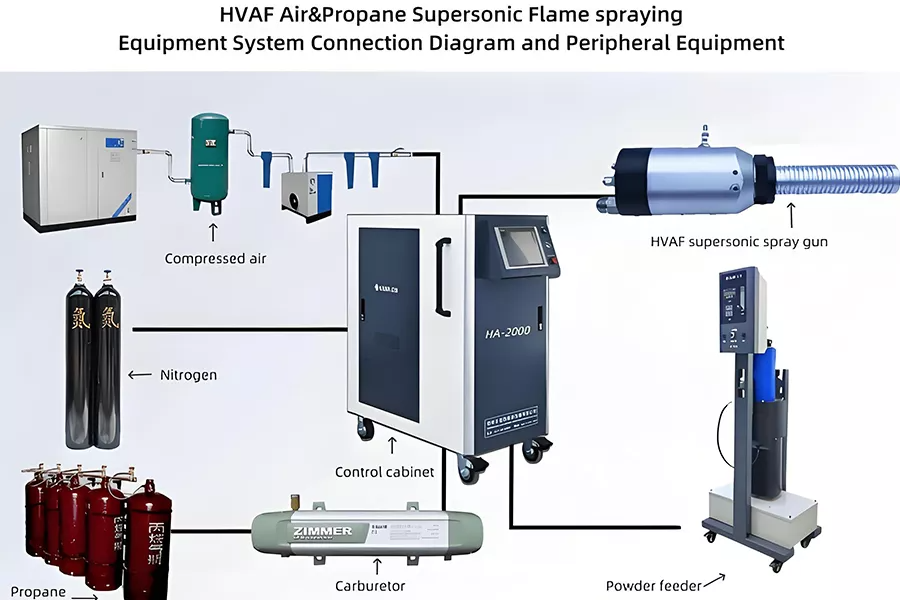
Key components in a thermal spray system include:
● Feedstock material (e.g., powders or wires)
● Spray gun/torch (for heating and depositing material)
● Control system (to regulate the spray parameters)
● Gas supply systems (for combustion or plasma generation)
These elements work together to create durable coatings that protect against wear, corrosion, and other environmental factors.
Thermal spray works by heating the feedstock material using a heat source—either combustion flame, plasma, or electric arc—until it reaches a molten or semi-molten state. These particles are then accelerated towards a prepared surface at high velocities. Upon impact, they flatten and form splats, which quickly cool and bond to each other and the substrate. Over multiple layers, this process creates thick, protective coatings.
The "splat" phenomenon refers to how the molten particles flatten upon contact with the surface, solidify rapidly, and bond mechanically to the substrate. This mechanical bonding process ensures the coatings are durable and resistant to various stresses.
Thermal spray coatings can be made from various materials, including metals, alloys, ceramics, and polymers. The choice of material depends on the desired properties of the coating and the specific application. These materials are typically available in powder, rod, or wire form, each of which affects the deposition process.
● Powders are the most commonly used feedstock due to their ability to be melted and sprayed in various ways.
● Wires are often used in arc spray systems, where an electric arc melts the material for deposition.
Before spraying, the feedstock must be prepared to ensure it has the right particle size and distribution, which directly influences the coating's quality and performance.
The material is heated using one of several energy sources. The most common methods are:
Heating Method | Works | Temperature Range | Common Applications |
Flame Spray | Uses combustion gases like oxygen and acetylene. | 2,500–3,000°C | Corrosion protection, wear resistance |
Plasma Spray | Uses ionized gas (plasma) for high temperatures. | Up to 15,000°C | High-temperature coatings, ceramics |
Arc Spray | Uses electric arcs to melt feedstock, enabling high deposition rates. | 4,000–6,000°C | Large-area coatings, cathodic protection |
The heating process ensures that the material reaches a molten or semi-molten state, enabling it to form a smooth, continuous coating upon impact with the substrate.
Once the feedstock particles are heated and accelerated, they impact the substrate with high velocity. Upon impact, the molten particles spread out and flatten, creating a "splat" on the surface. As the particles cool rapidly, they solidify and bond to the substrate and each other, forming a layer.
This process is repeated multiple times to build up the coating thickness. The coating can range from 50 to 500 microns thick, depending on the application and the required properties. As each layer cools and solidifies, it bonds with the previous layer, creating a durable and cohesive coating.
Thermal spray coatings can be tailored to different thicknesses based on the needs of the application. Thin coatings provide protection against corrosion and wear, while thicker coatings are ideal for applications requiring enhanced thermal or electrical insulation. These coatings are known for their durability and resistance to high temperatures, corrosion, and wear.
Coating durability depends on the material used, the process parameters, and the quality of surface preparation. In industries like aerospace, automotive, and biomedical sectors, thermal spray coatings are essential for prolonging the life of critical components.
Flame spray uses a combustion flame to melt the feedstock material. The heat source typically consists of a fuel gas (such as acetylene) mixed with oxygen to generate a high-temperature flame. The molten material is then directed onto the substrate to form a coating.
This process is commonly used for applications requiring wear resistance and corrosion protection. It is also effective for repairing worn parts, such as industrial machinery or tools.
Arc spray utilizes an electric arc to melt consumable wire electrodes. The molten material is atomized and sprayed onto the substrate using compressed air. This method is known for its high deposition rates and is often used in applications like corrosion protection for infrastructure, such as bridges and marine structures.
Arc spray is particularly effective for coating large areas with materials like zinc and aluminum, which are used for cathodic protection.
Plasma spray uses an electrically generated plasma arc to heat and melt the feedstock material. Plasma spray is particularly well-suited for high-temperature applications due to the extreme temperatures that can be achieved—up to 15,000°C. It is commonly used in aerospace for turbine blades and other critical components.
The plasma spray process produces coatings that are highly dense and smooth, making them ideal for high-performance applications like thermal barriers or biomedical coatings.
HVOF combines combustion and high-velocity air to propel molten particles at supersonic speeds. This process results in very dense, low-porosity coatings that are highly resistant to wear and corrosion.
HVOF is commonly used for coating parts that undergo extreme mechanical stresses, such as drilling components, valves, and gas turbine parts.
Process | Heat Source | Key Applications |
Flame Spray | Combustion flame | Wear resistance, corrosion protection |
Arc Spray | Electric arc | Corrosion protection, large-area coating |
Plasma Spray | Plasma arc | High-temperature applications, aerospace |
HVOF | Combustion and high-velocity air | Wear resistance, mechanical stress protection |
Thermal spray technology significantly enhances the surface properties of materials. Coatings applied through thermal spray offer superior protection against wear, corrosion, and high temperatures. This is especially crucial for components exposed to harsh environmental conditions, such as turbines, automotive parts, and industrial machinery.
Thermal spray can also improve the electrical conductivity of parts, making it a versatile solution for a variety of industries.
Thermal spray technology is used in several key industries, including:
● Aerospace: Thermal spray coatings are used to protect turbine blades, engine components, and other high-performance parts from extreme temperatures and wear.
● Automotive: Thermal spray is used to enhance the durability of components like piston rings and EGR valves, which are critical for engine efficiency.
● Biomedical: Biocompatible coatings are applied to medical implants to improve their longevity and reduce the risk of corrosion in the human body.
● Manufacturing: Thermal spray helps improve the life and functionality of machinery components, providing a cost-effective solution for repairs and maintenance.
One of the key benefits of thermal spray is its ability to repair worn-out components at a fraction of the cost of replacing them. The process is highly efficient, allowing for the coating of large areas quickly, which reduces downtime and maintenance costs.
Thermal spray also minimizes the heat transfer to the substrate, which helps preserve the base material's properties while improving its surface characteristics.
Advantage | Description |
Surface Protection | Enhances wear, corrosion, and temperature resistance |
Versatility | Applies to aerospace, automotive, biomedical, and manufacturing |
Cost-Effectiveness | Repairs worn components at lower costs than replacements |
Efficiency | Fast application, reducing downtime and maintenance |
Thermal spray coatings can be made from a wide range of materials:
Material Type | Examples | Key Properties | Common Applications |
Metals | Aluminum, Copper, Stainless Steel | Wear and corrosion resistance | Automotive, manufacturing, marine |
Ceramics | Alumina (Al2O3), Zirconia | High-temperature stability, insulation properties | Aerospace, energy, electronics |
Cermets | Tungsten Carbide (WC)-Cobalt (Co) | Hardness of ceramics, toughness of metals | Wear-resistant coatings, drilling components |
The choice of material depends on the application's specific needs, including temperature tolerance, wear resistance, and environmental factors.
Innovations in thermal spray coatings have led to the development of specialized materials, such as:
● Nanostructured powders: These powders have fine grain sizes and offer enhanced mechanical properties, such as increased hardness and wear resistance.
● Self-lubricating composites: Materials like graphite and MoS2 (molybdenum disulfide) are used to create coatings that reduce friction and wear in high-stress applications.
Thermal spray technology plays a crucial role in the aerospace and automotive industries, where components are subjected to extreme conditions. In aerospace, it is used to protect turbine blades, fuel nozzles, and other critical parts from high temperatures and mechanical wear. In the automotive sector, thermal spray coatings help improve engine efficiency and extend the lifespan of components such as pistons and valves.
In the biomedical field, thermal spray coatings are used to enhance the performance of medical implants, such as hip replacements and dental implants. These coatings improve the implants' wear resistance and biocompatibility. In manufacturing, thermal spray is widely used to extend the life of machinery parts, reducing the need for expensive replacements and minimizing downtime.
Industry | Application Examples | Benefits |
Aerospace | Turbine blades, fuel nozzles | High temperature and wear protection |
Automotive | Pistons, valves | Improved engine efficiency, extended lifespan |
Biomedical | Hip replacements, dental implants | Enhanced wear resistance, biocompatibility |
Manufacturing | Machinery parts | Cost-effective repairs, reduced downtime |
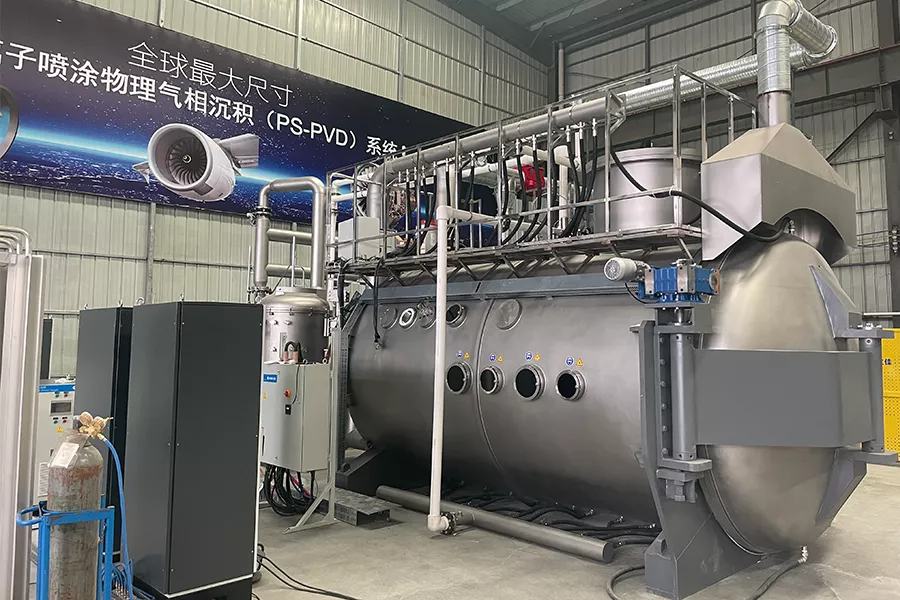
As industries continue to demand more durable and efficient materials, the future of thermal spray technology looks promising. New developments in cold spray and high-velocity air-fuel (HVAF) processes are expanding the range of materials and applications for thermal spray coatings. These advancements enable the deposition of thicker coatings and materials that were previously difficult to spray.
As more industries recognize the advantages of thermal spray technology, its adoption is expected to grow. Thermal spray offers a reliable, cost-effective solution for enhancing material properties and extending the lifespan of critical components. Its versatility makes it a valuable tool in a wide range of industries, including aerospace, automotive, biomedical, and manufacturing.
Thermal spray technology has transformed surface engineering by offering a cost-effective solution for enhancing material properties. It improves wear resistance, corrosion protection, and thermal management, making it crucial for industries needing high-performance materials. With ongoing technological advancements, the applications of thermal spray will continue to grow, driving innovation. Companies like Zhengzhou Lijia Thermal Spray Machinery Co., LTD provide high-quality thermal spray equipment that delivers superior performance, offering significant value to industries worldwide.
A: Thermal spray technology involves applying molten or semi-molten materials onto a surface to form durable coatings. It enhances wear resistance, corrosion protection, and thermal management, making it vital in industries requiring high-performance materials.
A: Thermal spray works by heating materials to a molten or semi-molten state and spraying them onto a substrate. The particles rapidly solidify upon impact, bonding to the surface to create a protective coating.
A: Thermal spray is essential for improving the durability and functionality of components. It provides a cost-effective solution for protecting materials from wear, corrosion, and high temperatures in various industries.
A: Thermal spray offers superior wear resistance, corrosion protection, and thermal insulation without significantly altering the substrate material. It's also efficient, cost-effective, and versatile across different industries.
A: Common materials used in thermal spray include metals, alloys, ceramics, and cermets. The choice of material depends on the specific application and desired coating properties.
A: While thermal spray equipment and materials can require an initial investment, the long-term cost savings are significant. The ability to repair worn components and extend their lifespan makes it a cost-effective solution in the long run.


