
Author: Site Editor Publish Time: 2026-01-16 Origin: Site
Thermal spray technology is revolutionizing industries by enhancing the durability and performance of critical components. But how exactly does it work, and why is it so essential across diverse sectors like aerospace, oil & gas, and manufacturing?
In this article, we'll explore the different types of thermal spray processes and their significance. You'll learn how these processes are used to combat wear, corrosion, and extreme temperatures, making equipment last longer and perform better under harsh conditions.
Thermal spray refers to a collection of coating processes where fine particles of a material are heated to a molten or semi-molten state and then projected onto a surface at high velocities. This results in a protective coating that bonds to the substrate, creating a layer that improves surface properties like wear resistance, corrosion protection, and thermal insulation. These coatings are designed to extend the lifespan of the underlying material by shielding it from harmful environmental factors such as heat, moisture, and abrasion.
The thermal spray process is highly versatile and can be tailored to suit different materials, substrates, and operating conditions. This adaptability makes it ideal for a wide range of applications, from automotive parts that need to resist friction, to turbine blades exposed to extreme temperatures, or even electronics requiring fine, precise coatings. With various types of thermal spray methods available, industries can select the most suitable process to meet their specific performance requirements.
Thermal spray coatings have several critical characteristics that make them highly effective for protecting and enhancing components across various industries. Below are key characteristics, organized into different categories:
Characteristic | Detail | Applications | Benefits |
Corrosion Protection | Prevents rust and degradation, especially in marine or offshore equipment. | Marine, Offshore, Automotive | Enhances lifespan, reduces maintenance |
Wear Resistance | Designed to withstand friction and abrasive forces. | Aerospace, Manufacturing | Improves durability, reduces part failure |
Thermal Insulation | Endures extreme temperatures without degrading. | Energy, Aerospace, Industrial | Protects components from heat damage |
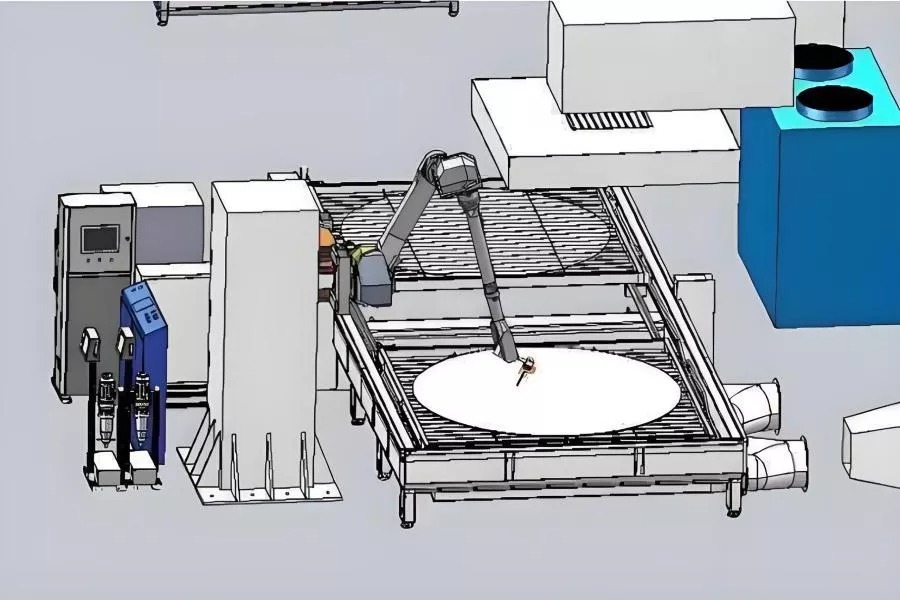
In flame spraying, a combustion flame created by mixing oxygen and fuel gas melts a wire or powder. The molten material is then projected onto the surface by the force of the combustion gases. This method is typically used for creating coatings that are porous, which can be beneficial for applications requiring high corrosion resistance.
Flame spraying is commonly used in industries like automotive and maritime for corrosion protection, especially with materials like aluminum or zinc.
● Cost-Effective: Flame spraying is one of the more economical thermal spray processes.
● Large Area Coverage: Suitable for coating large surfaces without high equipment cost.
In wire arc spraying, two consumable wires are fed into an electric arc, melting the wires at the point of contact. The molten droplets are then atomized using compressed air and directed onto the substrate.
Wire arc spraying is ideal for corrosion protection, reclamation of worn-out components, and even for producing electrically conductive coatings.
● High Throughput: This method is efficient, making it suitable for large-scale production.
● Mechanical Bonding: Coatings produced are mechanically bonded to the substrate, providing strong adhesion.
Process Type | Key Advantage | Typical Application |
Flame Spraying | Cost-effective, large area coverage | Automotive, Maritime (Corrosion Protection) |
Wire Arc Spraying | High throughput, mechanical bonding | Corrosion Protection, Component Reclamation |
Plasma spraying involves using an electric arc to generate a plasma jet. This jet heats powder particles to very high temperatures, causing them to melt and be propelled towards the substrate. The result is a dense, strong coating with excellent resistance to high temperatures.
Plasma spraying is used for creating coatings that need to withstand extreme heat and stress, such as turbine blades, biomedical implants, and industrial ceramics.
● Precision Coatings: Plasma spraying allows for precise control over coating thickness and material composition.
● Versatility: It can be used for metals, ceramics, and composite materials.
HVOF uses a high-velocity oxygen and fuel mixture that combusts in a chamber, producing a high-speed gas stream. This stream propels molten particles onto a substrate, creating dense, low-porosity coatings.
HVOF is widely used in industries requiring high wear and corrosion resistance, such as aerospace, oil & gas, and automotive.
● Low Porosity: HVOF coatings have less than 1% porosity, making them highly resistant to corrosion.
● Superior Wear Resistance: The high-density coatings produced can withstand extreme wear conditions.
The detonation gun uses controlled detonations to create shockwaves that accelerate particles at high velocities. This high-energy method creates very dense and hard coatings, ideal for tough industrial environments.
This process is used in hard-facing applications, such as protecting components exposed to cavitation or extreme wear.
● Extremely Dense Coatings: D-Gun processes provide very dense coatings with superior durability.
● Resistance to Wear: The coatings can withstand extreme abrasive and erosive conditions.
Process Type | Key Advantage | Typical Application |
Plasma Spraying | Precision coatings, versatility | Turbine blades, Biomedical implants, Ceramics |
HVOF | Low porosity, superior wear resistance | Aerospace, Oil & Gas, Automotive |
Detonation Gun (D-Gun) | Extremely dense coatings, resistance to wear | Hard-facing, Extreme wear protection |
Cold spraying involves accelerating solid powder particles to supersonic speeds using a gas stream, without melting them. The high-velocity particles impact the surface and create a dense coating with minimal oxidation.
Cold spraying is ideal for sensitive substrates or when oxidation must be minimized, such as in aerospace and electronics.
● Minimal Thermal Impact: Cold spraying avoids heat-related damage to the substrate.
● Dense Coatings: The resulting coatings are dense and provide excellent corrosion protection.
Spray and fuse is a two-step process where powder is first sprayed onto the substrate and then heated in a furnace or using a torch to fuse the material into a solid layer.
This method is often used for coatings that need to withstand high mechanical stress, such as in heavy machinery or power plants.
● Good Thermal Resistance: The fused coatings provide excellent thermal protection.
● Strong Adhesion: The heat treatment ensures a solid bond between the substrate and the coating.
Process Type | Key Advantage | Typical Application |
Cold Spraying | Minimal thermal impact, dense coatings | Aerospace, Electronics |
Spray and Fuse | Good thermal resistance, strong adhesion | Heavy machinery, Power plants |
Low-energy processes like flame spraying and wire arc spraying consume less energy compared to high-energy methods such as plasma spraying or HVOF. However, higher-energy methods often result in coatings with superior properties, making them suitable for more demanding applications.
Low-energy processes are more cost-effective, making them a popular choice for large-scale industrial applications. On the other hand, high-energy methods tend to be more expensive but offer superior coating properties, making them ideal for high-performance environments.
High-energy processes like HVOF and plasma spraying typically produce coatings with lower porosity and higher density. These coatings are more durable and resistant to wear, making them suitable for industries where component longevity is critical.
Choosing the right thermal spray process depends on the application requirements:
● Low-energy processes are ideal for corrosion protection in less extreme conditions.
● High-energy processes like HVOF and plasma spraying are perfect for industries requiring wear resistance and high-temperature protection.
Process Type | Energy Efficiency | Cost Effectiveness | Ideal Application |
Low-Energy | Consumes less energy | More cost-effective | Corrosion protection in less extreme conditions |
High-Energy | Consumes more energy | More expensive, superior properties | Wear resistance and high-temperature protection |
HVAF uses compressed air instead of pure oxygen, creating a spray with lower temperatures. This makes it ideal for materials that are sensitive to high heat.
● Lower Temperature Benefits: Especially useful for delicate materials.
● Good Wear Resistance: Provides strong protection against wear, even at lower temperatures.
Vacuum plasma spraying is performed in a controlled environment, which reduces oxidation and ensures a more precise coating. It’s particularly effective for coating delicate parts.
Used in industries such as automotive, aerospace, and precision electronics, where component integrity is critical.
● Precision Coatings: Ideal for applications requiring high precision.
● Reduced Oxidation: The vacuum environment minimizes oxidation during the spraying process.
Process Type | Key Advantage | Typical Application |
HVAF | Lower temperature benefits, good wear resistance | Delicate materials, Aerospace |
Vacuum Plasma Spraying | Precision coatings, reduced oxidation | Automotive, Aerospace, Precision electronics |
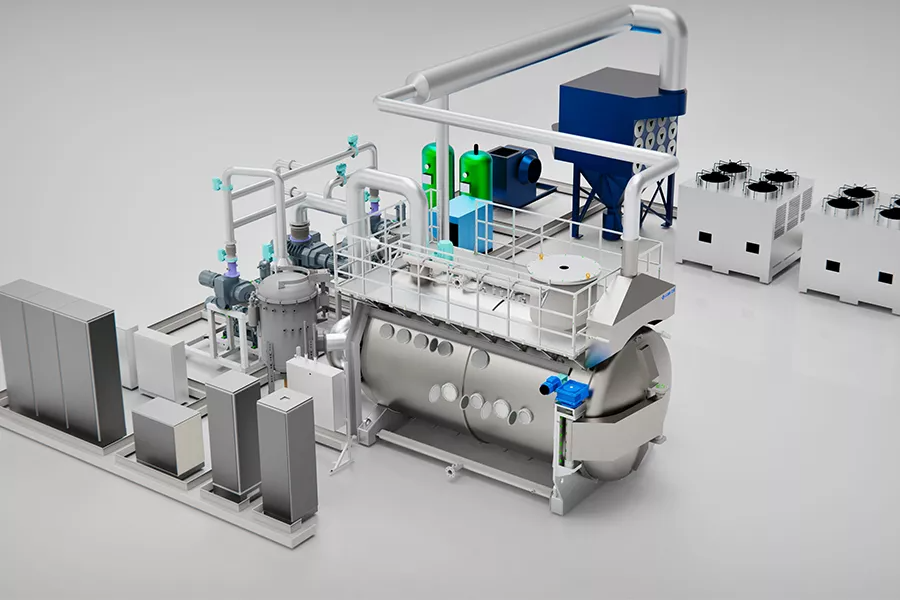
In the aerospace industry, components such as turbine blades and engine parts face extreme conditions, including high temperatures, intense pressure, and abrasive forces. Thermal spray processes, particularly plasma spraying and HVOF, are commonly used to provide the durability and performance required. These coatings ensure that components can withstand wear, reduce the risk of failure, and increase the lifespan of critical aerospace parts. By enhancing resistance to thermal damage, they play a key role in ensuring the safety and reliability of aircraft.
The oil and gas industry demands equipment that can operate in harsh and corrosive environments, where components are exposed to high pressures, temperatures, and aggressive chemicals. Thermal spraying is essential for protecting vital equipment like pumps, valves, and piping systems from corrosion and wear. By applying protective coatings, thermal spray enhances the resilience of these parts, reducing maintenance costs and downtime while ensuring operational efficiency. Coatings like those applied by HVOF and flame spraying offer exceptional protection for equipment in these demanding environments.
In the automotive and manufacturing industries, components such as engine parts, transmissions, and wear-prone machinery require coatings that can handle extreme conditions. Thermal spray coatings are widely used to enhance the durability of these parts, improving their resistance to friction, heat, and corrosion. These coatings not only extend the life of the components but also improve their performance by reducing wear and tear. Coating techniques such as plasma spraying and wire arc spraying are commonly applied to automotive parts, ensuring that they can withstand the high demands of modern production environments while providing long-lasting reliability.
Industry | Common Processes | Typical Applications |
Aerospace | Plasma Spraying, HVOF | Turbine blades, engine parts |
Oil & Gas | HVOF, Flame Spraying | Pumps, valves, piping systems |
Automotive | Plasma Spraying, Wire Arc Spraying | Engine parts, transmissions, machinery |
Thermal spray processes are essential for protecting components against wear, corrosion, and extreme temperatures. Whether using low-energy or high-energy methods, these processes enhance durability and performance. Choosing the right method depends on factors like wear conditions, temperature resistance, and cost. Zhengzhou Lijia Thermal Spray Machinery Co., LTD offers high-quality equipment designed to optimize these processes, providing reliable, cost-effective solutions for industries that require durable coatings. As thermal spray technology evolves, it continues to play a vital role in extending the lifespan of industrial components.
A: Thermal spray processes involve heating a coating material and spraying it onto a surface to enhance properties like wear resistance, corrosion protection, and thermal insulation.
A: The thermal spray process heats materials such as powders or wires to a molten state, then propels them onto a substrate, forming a protective coating.
A: Low-energy processes, like flame spraying, are cost-effective for large-area applications, while high-energy processes like HVOF create denser, more durable coatings ideal for extreme conditions.
A: Thermal spray processes offer high-performance coatings that protect aerospace components from wear, corrosion, and high temperatures, improving their longevity and efficiency.
A: Choosing the right thermal spray process depends on factors like temperature resistance, wear conditions, and cost considerations. Each method offers unique benefits for different applications.
A: Thermal spray technology enhances component durability, reduces downtime, and helps restore worn parts, offering cost-effective, long-lasting solutions for industries like oil & gas and automotive.


