
Author: Site Editor Publish Time: 2026-01-30 Origin: Site
Thermal spray coating is widely used in industries like aerospace, automotive, and manufacturing. This process involves spraying molten materials onto a substrate to create protective coatings. However, achieving the right coating thickness is crucial for its performance.
In this article, we'll explore how controlling thermal spray thickness affects coating quality. You will learn about the factors that influence thickness and methods to maintain consistency across different applications.
Thermal spray coating is a versatile technique that uses a heat source, such as a plasma arc or a combustion flame, to melt coating material and propel it onto the surface of a workpiece. The molten material rapidly cools and solidifies upon contact, forming a protective layer. There are several types of thermal spray processes, each suitable for different materials and applications:
Process Type | Method | Key Features | Materials Used |
Arc Spray | Uses an electric arc to melt metallic coating materials. | Suitable for high deposition rates. | Metals like zinc, aluminum, and bronze. |
Flame Spray | Uses a combustion flame to melt materials, both metallic and ceramic. | Effective in high-temperature environments. | Ceramic materials, metals like steel and alloys. |
High-Velocity Oxy-Fuel (HVOF) | High-speed combustion process resulting in dense coatings. | Produces coatings with high density and strong adhesion. | Metals, carbides, cermets, and ceramics. |
Plasma Spray | Utilizes a plasma arc to melt and spray materials. | Ideal for thin and uniform coatings. | Ceramics, metals, cermets (e.g., titanium, zirconia). |
Thermal spray coatings are commonly used in industries requiring high-performance surface materials:
● Aerospace: Protects turbine blades, engine components, and other high-stress parts. The coatings applied help parts withstand extreme temperatures and pressures, ensuring reliability and efficiency.
● Automotive: Applied to engine components and exhaust systems for improved durability and resistance to wear. Thermal spray coatings provide corrosion resistance for components exposed to harsh chemical environments and high temperatures.
● Manufacturing: Used in tooling and machinery components to extend service life by improving wear resistance. Industries also rely on thermal spray coatings to repair worn components, reducing the need for expensive replacements.
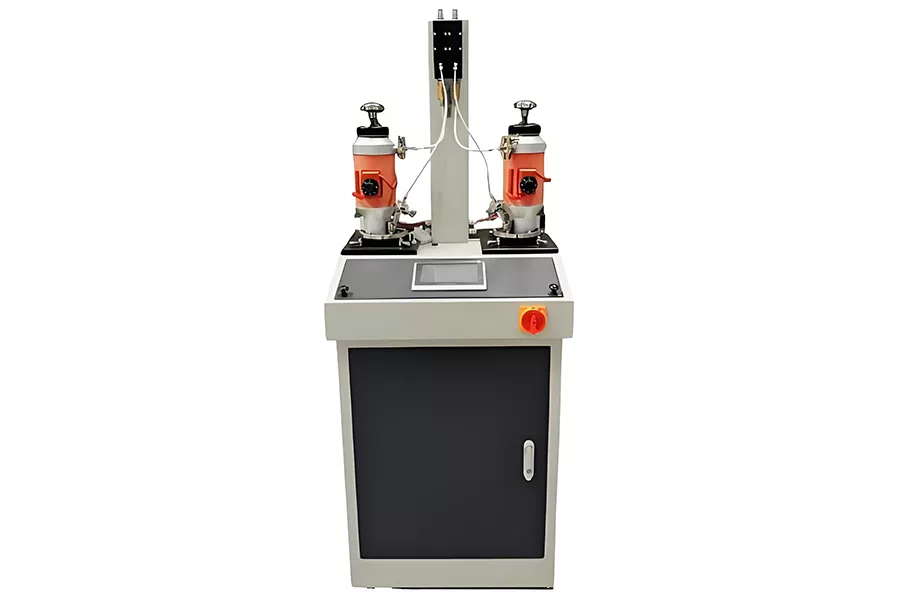
Effective thermal spray coating relies heavily on controlling the spray thickness to ensure uniform coverage and optimal performance. The thickness of a coating is influenced by several key factors:
Factor | Description | Impact on Coating Thickness |
Surface Speed | The speed at which the spray gun moves across the part. | Faster movement results in thinner coatings; slower speeds deposit more material, leading to thicker coatings. |
Spray Distance | The distance between the spray gun and the workpiece. | Shorter distances produce denser coatings; too short a distance can cause excessive buildup and uneven thickness. |
Number of Passes | The number of times the spray gun moves over the workpiece to apply material. | More passes allow for thicker coatings by gradually building up material, ensuring uniformity. |
Several variables come into play when controlling the coating thickness:
● Gun movement and part rotation: The movement of both the gun and the part influences how evenly the coating is applied. Any irregularities can lead to uneven thickness across the surface. If the spray gun moves too quickly or the part rotates too slowly, the coating may be too thin in some areas. Conversely, slow movement or fast rotation could lead to thicker coatings than desired.
● Powder feed rate: The rate at which the coating material is fed into the spray gun impacts the amount of material deposited per pass, directly affecting thickness. A higher powder feed rate typically results in a thicker coating. However, it’s crucial to balance the powder feed with other parameters like spray distance and surface speed to prevent excessive buildup or defects.
● Gas flow and spray pattern: Optimizing the gas flow and controlling the spray pattern ensures that the coating is uniform, minimizing defects and variations in thickness. Gas flow impacts particle velocity and temperature, which in turn affects how the material adheres to the substrate. A steady spray pattern helps to evenly distribute the coating material, ensuring consistency across the part surface.
Manipulating the surface speed and spray distance is one of the most direct ways to control coating thickness.
● Surface speed: By adjusting the speed at which the spray gun moves relative to the part (or vice versa), you control how much material is deposited in each pass. It’s essential to find the optimal surface speed to ensure proper buildup without compromising the coating’s uniformity.
● Step height and overlap: For flat surfaces, adjusting the vertical step height or horizontal overlap of spray passes ensures even coverage. Proper overlap prevents defects like ridges and gaps. It’s important to carefully plan the pass pattern, especially for parts with complex shapes or intricate geometries.
● Powder feed rate: A higher powder feed rate generally results in a thicker coating. However, this can also affect the coating’s microstructure, potentially impacting its properties. If the feed rate is too high, it can result in an uneven coating that may not adhere properly. Therefore, controlling the feed rate is critical to achieving the desired thickness without sacrificing quality.
● Spray distance: A shorter spray distance typically results in thicker deposits as particles do not have time to cool before hitting the substrate. However, the distance must be optimized to avoid excessive material buildup in certain areas, which could lead to an uneven surface.
● Gas and power settings: Optimizing input power and gas flow, such as hydrogen in HVOF, ensures consistent particle temperature and efficient deposition. These parameters directly influence the velocity and temperature of the particles, affecting how well they bond to the substrate. Balancing these settings helps achieve consistent coating thickness across the surface.
For complex geometries, robotic systems equipped with advanced algorithms plan precise gun paths. These systems ensure uniform coating thickness across intricate surfaces by adjusting the spray pattern dynamically as the robot moves. This technology is particularly beneficial for parts with complex shapes, where manual coating processes might struggle to ensure consistent deposition.
Method | Impact |
Surface Speed | Controls material deposition per pass. |
Step Height & Overlap | Ensures even coverage and avoids defects. |
Powder Feed Rate | Affects coating thickness and quality. |
Spray Distance | Shorter distance increases thickness, needs balance. |
Gas & Power Settings | Ensures consistent deposition for uniform thickness. |
Robotic Trajectory | Guarantees uniform thickness for complex geometries. |
Advanced sensing technologies like acoustic emission sensors and optical systems can provide real-time data about the particle impact and cooling process. These sensors can track how the coating is building up, ensuring that the thickness is controlled consistently throughout the application. By monitoring these signals, operators can adjust the process parameters as needed to maintain uniformity.
Non-destructive thickness gauges are employed to measure the coating thickness during application. These gauges provide immediate feedback, allowing for quick adjustments to the process, preventing deviations from the desired thickness before they affect the final product. This real-time monitoring helps operators maintain the desired coating thickness without compromising quality.
The quality of substrate preparation plays a significant role in achieving an optimal coating thickness. The surface roughness and cleanliness directly influence how well the coating adheres to the material, which impacts the uniformity and effectiveness of the coating. A properly prepared surface reduces the risk of defects such as delamination and ensures better performance. Proper cleaning methods, such as abrasive blasting, can improve coating adhesion and consistency.
After the thermal spray process, machining methods like fine boring may be used to correct minor thickness variations. While post-processing can address small discrepancies, it’s much more efficient to control thickness during the spray process. Excessive corrections after coating can lead to material waste and increased costs. Post-processing techniques should be seen as a last resort for fine-tuning the coating rather than as the primary means of thickness control.
Maintaining consistent surface speed and gun movement is essential for achieving the desired coating thickness. Irregularities in movement can lead to uneven coating distribution, resulting in areas that are either too thick or too thin. It's important to ensure that both the spray gun and part are moving at a controlled rate throughout the process.
When coating complex shapes or parts with intricate geometries, the challenge of achieving uniform coating thickness becomes even more pronounced. Spray paths must be carefully planned to ensure all areas of the part receive an even coating, without thin spots or buildup in certain areas. Robotic systems and trajectory planning help optimize the process for complex parts, ensuring uniformity in thickness and coverage.
Challenge | Solution | Benefit |
Surface Speed & Gun Movement | Ensure consistent movement of both spray gun and part. | Achieves uniform coating thickness. |
Uniform Coating on Complex Geometries | Use robotic systems and trajectory planning. | Optimizes coating uniformity on intricate surfaces. |
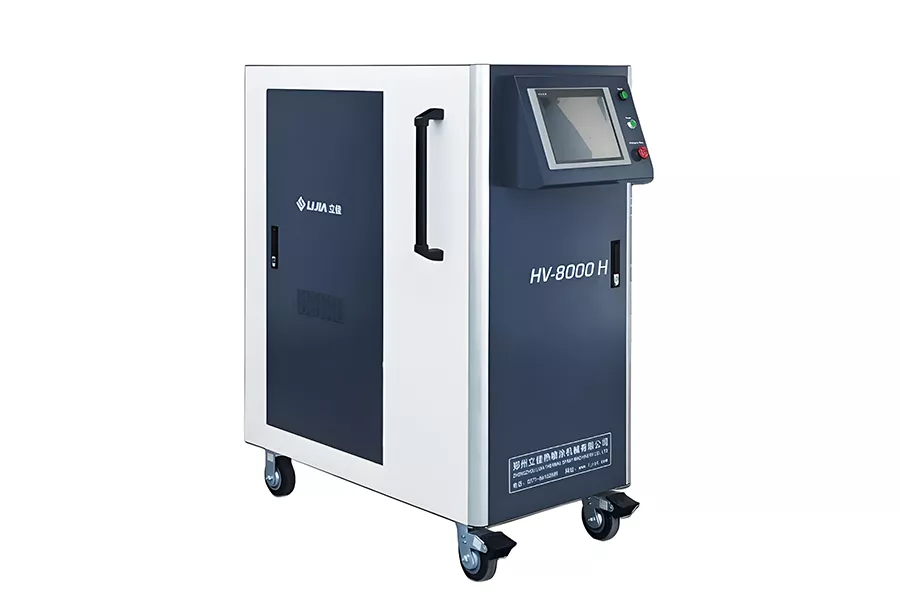
The performance of a thermal spray coating is directly tied to its thickness. If the coating is too thin, it may not provide adequate protection against wear, corrosion, or thermal stress. On the other hand, an overly thick coating can lead to issues like cracking, delamination, or poor adhesion to the substrate. Proper control over the thermal spray thickness ensures that the coating can effectively withstand harsh operational conditions without compromising its structural integrity or protective qualities. It balances the need for durability with the risk of failure due to excessive material buildup.
In industries like aerospace, automotive, and energy, precise control over coating thickness is essential for ensuring safety, efficiency, and long-term performance. For example, in aerospace, turbine blades require very specific thicknesses to operate effectively under extreme temperature and mechanical stress. A deviation from the required thickness could result in catastrophic failure, compromising both the safety of the system and the operational efficiency of critical machinery. In automotive and energy sectors, the ability to precisely control coating thickness also enhances the lifespan of components exposed to harsh conditions like friction and high temperatures.
Effective thermal spray coating thickness control is essential for achieving durable coatings with excellent wear resistance and corrosion protection. By utilizing techniques like real-time monitoring, robotic trajectory planning, and proper substrate preparation, industries can ensure consistent thickness and enhanced product performance.
As technologies evolve, the ability to control coating thickness becomes even more critical, especially in aerospace and automotive sectors. Zhengzhou Lijia Thermal Spray Machinery Co., LTD provides advanced thermal spray equipment, offering precise control and improved coating quality for various applications, ensuring optimal results and long-lasting perfor
A: Thermal spray coating thickness control refers to managing the coating's thickness during application to ensure uniformity and optimal performance. It involves adjusting parameters like surface speed, spray distance, and number of passes.
A: Controlling thermal spray thickness ensures the coating provides necessary wear resistance and corrosion protection. Improper thickness can lead to poor adhesion, cracking, or compromised performance.
A: Thermal spray thickness can be controlled by adjusting parameters like gun speed, spray distance, powder feed rate, and spray pattern. Real-time monitoring and robotic systems help maintain consistency.
A: Factors such as surface speed, part rotation, spray distance, and gas flow impact thermal spray thickness. Proper management of these elements ensures an even and accurate coating thickness.
A: Thermal spray thickness directly affects coating durability. Too thin a layer may fail to protect against wear, while too thick a layer could cause cracking or poor adhesion, reducing coating efficiency.
A: Real-time monitoring systems, like acoustic emission sensors and optical feedback, provide immediate data on coating build-up. This enables timely adjustments to ensure consistent thermal spray thickness during the application.


