|
Chromium oxide 40% titanium oxide (Cr₂O₃-40% TiO₂) coating powder retains the excellent corrosion resistance and certain hardness of chromium oxide, and further optimizes the toughness and comprehensive adaptability of the coating due to the increase in titanium oxide content. With a uniform and dense structure, good wear resistance, corrosion resistance, and outstanding impact resistance, it has demonstrated excellent application value in typical components in multiple industries.
Hydraulic industry: sealing area between piston rod and pump
The piston rod in the hydraulic industry is the core moving component for converting hydraulic energy, which needs to undergo high-frequency expansion and contraction movements in high-pressure environments. The surface not only has to withstand the friction and wear of impurities in hydraulic oil, but also needs to cope with periodic pressure impacts. Chromium oxide -40% titanium oxide coating, with reasonable hardness (meeting daily wear resistance requirements) and better toughness, can effectively buffer the impact stress during the movement of the piston rod, avoid cracking and peeling of the coating due to excessive brittleness, ensure the movement accuracy and surface smoothness of the piston rod, and reduce sealing failure caused by wear. The sealing area of the pump has strict requirements for sealing performance and resistance to medium erosion. The coating has low porosity and dense structure, which can form a reliable physical barrier to block the penetration of hydraulic oil. At the same time, its corrosion resistance can resist the chemical erosion of hydraulic oil and its additives, prolong the service life of the pump sealing area, reduce the risk of hydraulic system leakage, and improve the stability of equipment operation.
Dry battery production: Core shaft
The dry battery core shaft needs to continuously come into contact with battery raw materials (such as electrode materials, electrolyte residues, etc.) during the production process, and undertake precise transmission tasks. The surface is susceptible to friction loss and slight chemical corrosion. The wear resistance of the chromium oxide 40% titanium oxide coating can reduce the friction loss between the core shaft and the battery material, maintain the dimensional accuracy of the shaft, and ensure the continuity of battery production. The dense structure of the coating can isolate the corrosive components in the battery raw materials from corroding the core core matrix, and its possible stable physical properties can avoid contaminating the battery raw materials due to coating detachment, ensuring the production quality of dry batteries. In addition, the uniformity of the coating helps the core shaft achieve smooth transmission and improve production efficiency.
Textile Industry: Components and Drum shaped Blades
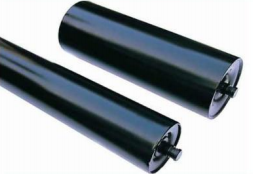
The components of the textile industry, such as guide rollers, stretching rollers, and separating rollers, are exposed to fiber friction, temperature fluctuations, and slight humidity for a long time. The surface needs to have wear resistance, micro corrosion resistance, and fatigue resistance. The wear resistance of chromium oxide 40% titanium oxide coating can effectively resist the continuous friction of fibers, prevent scratches or grooves on the surface of components, ensure smooth fiber transmission, and reduce quality problems such as wire breakage and fuzzing. Its optimized toughness makes the components less prone to coating cracking under temperature changes and mechanical vibrations, extending the maintenance cycle of the components. Drum shaped blades need to maintain sharpness and withstand cutting impacts in textile cutting and slitting processes. The hardness of the coating can maintain the sharpness of the blade, while good toughness can buffer the impact force during cutting, reduce blade breakage, improve the service life and cutting accuracy of the blade, and ensure the edge quality of textile products.
Compressor and cylinder: compressor screw and cylinder inner wall
During the high-speed rotation of the compressor screw, there is intense friction between the screw teeth and between the screw and the shell, while also bearing the pressure load of high-pressure gas, which requires extremely high wear resistance, compression resistance, and toughness of the coating. The wear resistance of the chromium oxide 40% titanium oxide coating can reduce the friction loss of the screw, lower the operating energy consumption, and the better toughness and compressive strength can cope with stress impact under high-pressure conditions, avoiding coating peeling or screw tooth surface damage, ensuring the compression efficiency and operational stability of the compressor. The long-term sliding friction between the inner wall of the cylinder and the piston ring can reduce the wear of the inner wall and decrease the leakage rate of the cylinder due to the compactness of the coating. Its corrosion resistance can resist the erosion caused by water vapor, impurities, etc. that may be contained in the compressed gas, prolong the service life of the cylinder, and reduce the maintenance cost of the compressor.
Mechanical engineering: shaft sleeve and wear-resistant ring
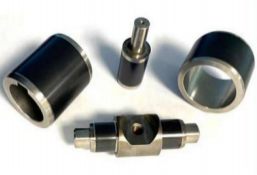
The shaft sleeve and wear-resistant ring in mechanical engineering are key components for reducing friction and bearing radial loads of shaft parts. They need to maintain stable wear resistance under complex working conditions such as vibration, impact, and changes in lubrication conditions. The wear resistance of chromium oxide 40% titanium oxide coating can reduce the friction coefficient between the shaft sleeve, wear-resistant ring and shaft, reduce energy loss in mechanical transmission, and improve equipment efficiency. Its outstanding toughness can effectively absorb the vibration and impact energy during operation, avoiding the cracking and peeling problems that traditional brittle coatings are prone to, and ensuring the structural integrity of the shaft sleeve and wear-resistant ring. Meanwhile, the compactness of the coating can prevent external dust and impurities from entering the friction interface, further enhancing its wear resistance, extending the overall service life of shaft components, and reducing equipment failure rates.